
Bathing as identity
To understand the ban you have to understand what a hammam meant in 15th-century Spain. It was not a gym with a pool. It was a cultural marker. Muslims bathed frequently — ablution before prayer was compulsory and the weekly bath was a deeply rooted custom. The Christians of the north, by contrast, distrusted frequent bathing. Excessive personal cleanliness was associated with vanity, with Muslims, with otherness.
When the Catholic Monarchs completed the Reconquista in 1492, the problem was not military — it was cultural. There were hundreds of thousands of Muslims converted to Christianity (Moriscos) who went on living as they always had: speaking Arabic at home, cooking with the same spices, putting on the same clean clothes on Fridays. And bathing.
The ban
Philip II’s Pragmatic of 1567 was explicit. Arab baths were banned. Clean changes of clothes on Fridays were banned. Speaking Arabic was banned. The zambras and leilas — Moorish festivals and celebrations — were banned. In essence, any cultural expression that distinguished the Moriscos from the old Christians was banned.
The aim was not hygienic. It was forced assimilation. If a Morisco bathed too often, he was suspected of secretly practising Islam. Bathing became evidence of heresy. The Inquisition was paying attention.
The result was the massive destruction of a wellbeing infrastructure that had taken centuries to build. Of the 700 baths of caliphal Córdoba, the vast majority were demolished, converted into warehouses, stables or dwellings, or simply abandoned until the roofs fell in.
What was lost
It was not only buildings that were lost. A culture of bodily care was lost, one that Europe would not recover until the 19th century, with the central European spa towns. For three hundred years, bathing frequently was suspicious in Spain. Personal hygiene went back centuries. The epidemics that ravaged Europe in that period have, among their many causes, the abandonment of the water and sanitation infrastructure that the Arabs had maintained.
What survived
Some baths held out. Those integrated into larger structures — palaces, convents, noble houses — survived as converted spaces. Others were buried beneath later constructions and turn up today in archaeological excavations.
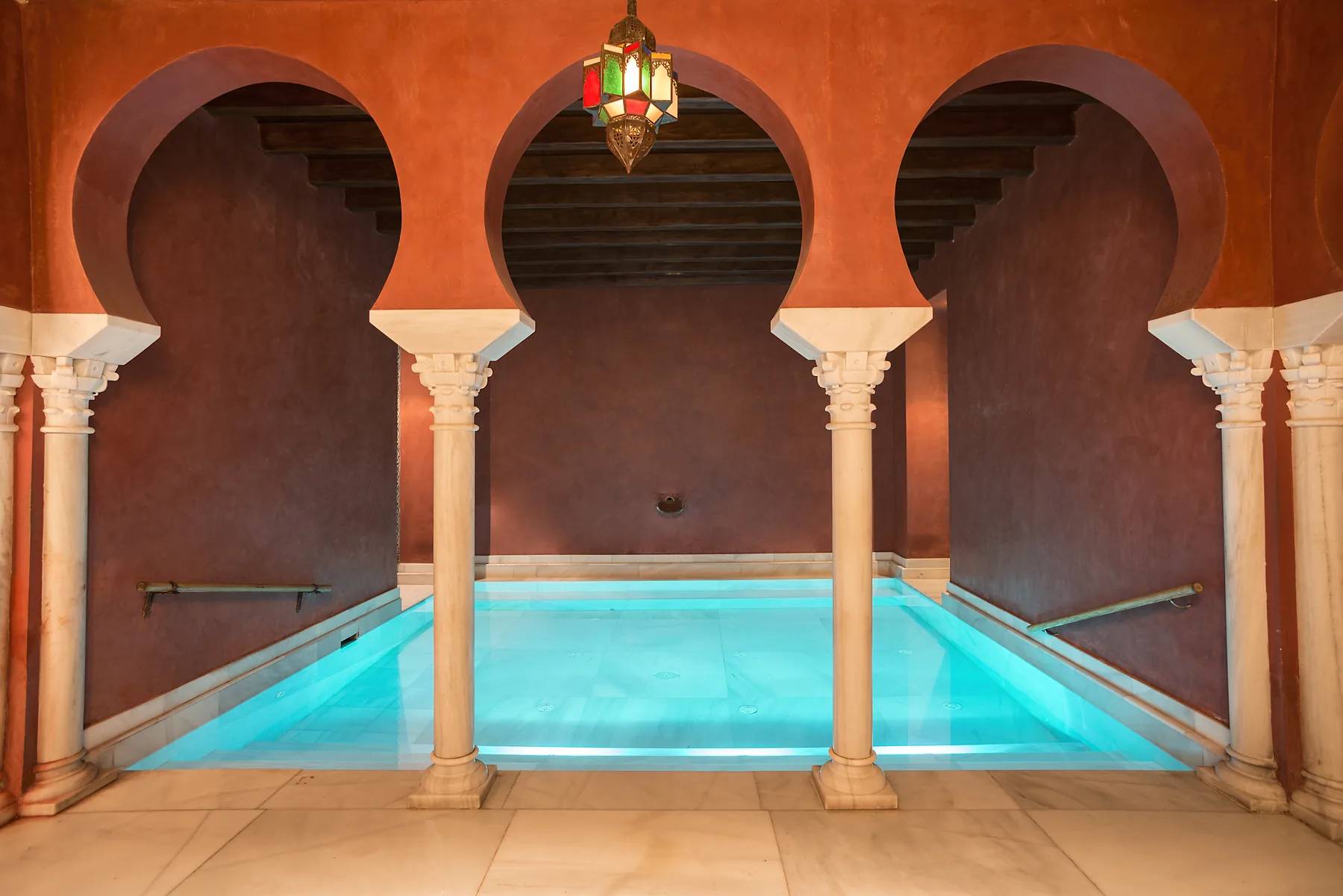
And a few — like the building on Calle Almanzor where the Arab Baths of Córdoba stand today — kept their bond with water across the centuries. Not always as a hammam, not always publicly, but the water kept flowing between these walls while the outside world decided that bathing was dangerous.
Five hundred years later, the doors are open. The water is hot. The steam fills the rooms. And people come to bathe again — this time with nobody forbidding it.