
Water before us
Córdoba was one of the most important cities of Roman Hispania. Capital of Baetica, birthplace of Seneca, with a system of public baths that followed the classical sequence: frigidarium, tepidarium, caldarium. Cold, warm and hot water. Underground furnaces heated the floor and the walls. The remains found beneath our building on Calle Almanzor date from that era.
700 baths in Islamic Córdoba
When the Arabs arrived in 711, they inherited the Roman bathing culture and perfected it. They kept the sequence of temperatures but added steam, aromatherapy and massage. Bathing stopped being mere hygiene and became a ritual. The chronicles speak of 700 public baths in the Córdoba of the Caliphate — one for every 350 inhabitants. It was a wellbeing infrastructure that no European city would match for centuries.
The Henestrosa family baths
The Reconquista was merciless with the hammams. Frequent bathing became associated with Muslim identity and turned into grounds for suspicion. Philip II banned the baths in 1567. Of the 700 hammams of Córdoba, the vast majority disappeared. But on Calle Almanzor, the baths survived. Documentary sources record that in the 15th century the baths of the Henestrosa family operated here.
The coins of 1930
Around 1930, Don José Araujo and one of his brothers discovered a cast-iron vessel full of old coins while going about their daily work. Their father was a muleteer on the Guadalquivir. With the sale of those coins, the family acquired several properties in Córdoba — among them, the house at number 18 Calle Almanzor. Later excavations in the building itself confirmed what the walls already suggested: beneath that floor there had been 15th-century public baths linked to the Henestrosa family and, before that, Roman baths from the 1st century.
Today
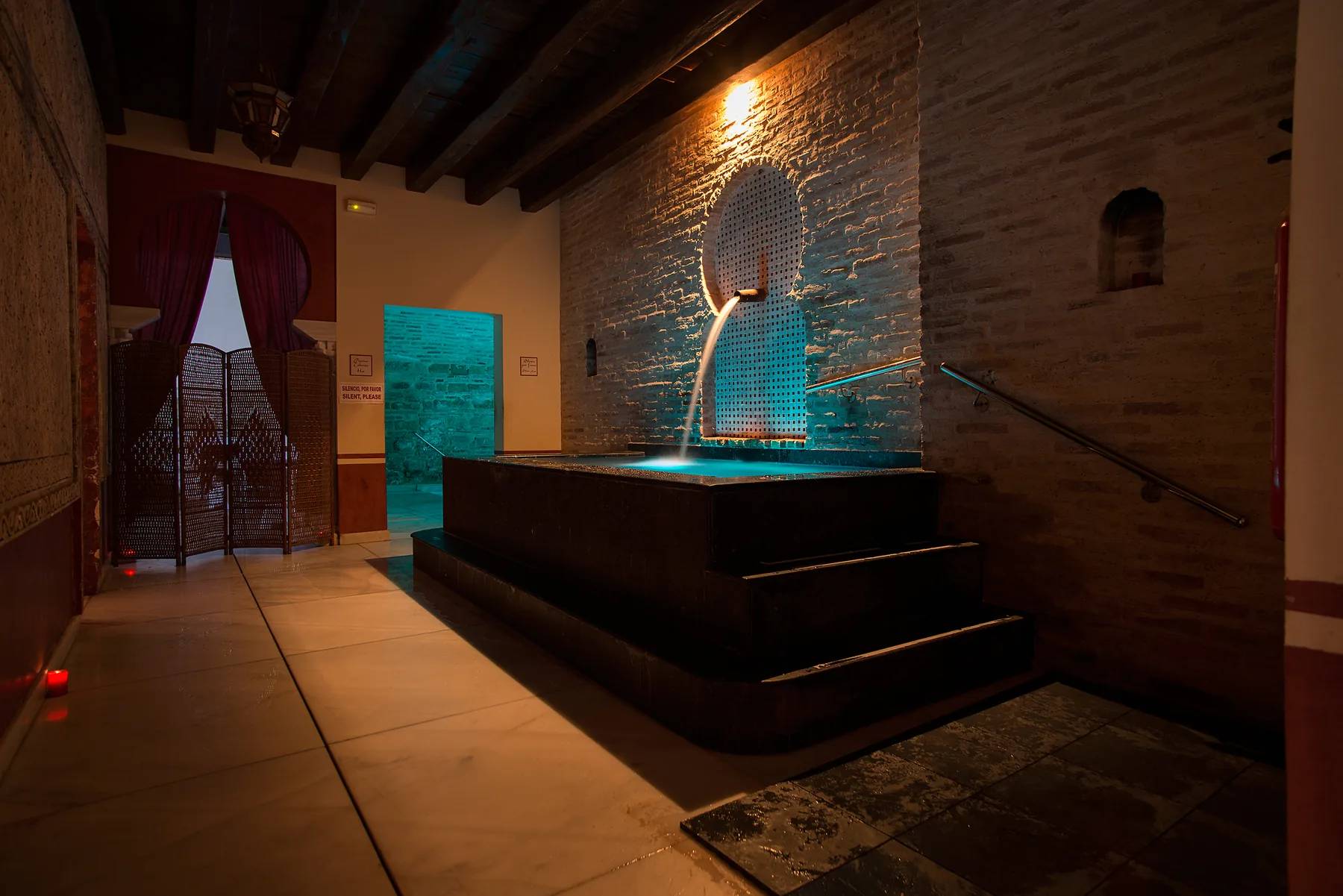
When you enter the Arab Baths of Córdoba and go down to the water area, you walk on two thousand years of history. It is not a themed reconstruction. It is the continuity of something this land has been practising since the Romans discovered that this site had the right conditions for hot water. The technology has changed. The essence is the same.