
A figure that is hard to imagine
The Arab chronicles speak of 700 public baths in the Córdoba of the Caliphate. Seven hundred. To put it in context: in the 10th century the city had around 250,000 inhabitants, which meant one bath for every 350 people. It was an infrastructure of hygiene and wellbeing that no European city would match for many centuries.
They were not luxuries. They were basic services. Every neighbourhood had its hammam, just as it had its mosque and its market. Bathing was part of the daily rhythm: you bathed at least once a week, before Friday prayers. The wealthier went daily. It was an act of hygiene, of socialising, of personal care and of religious devotion — all at once.
How they worked
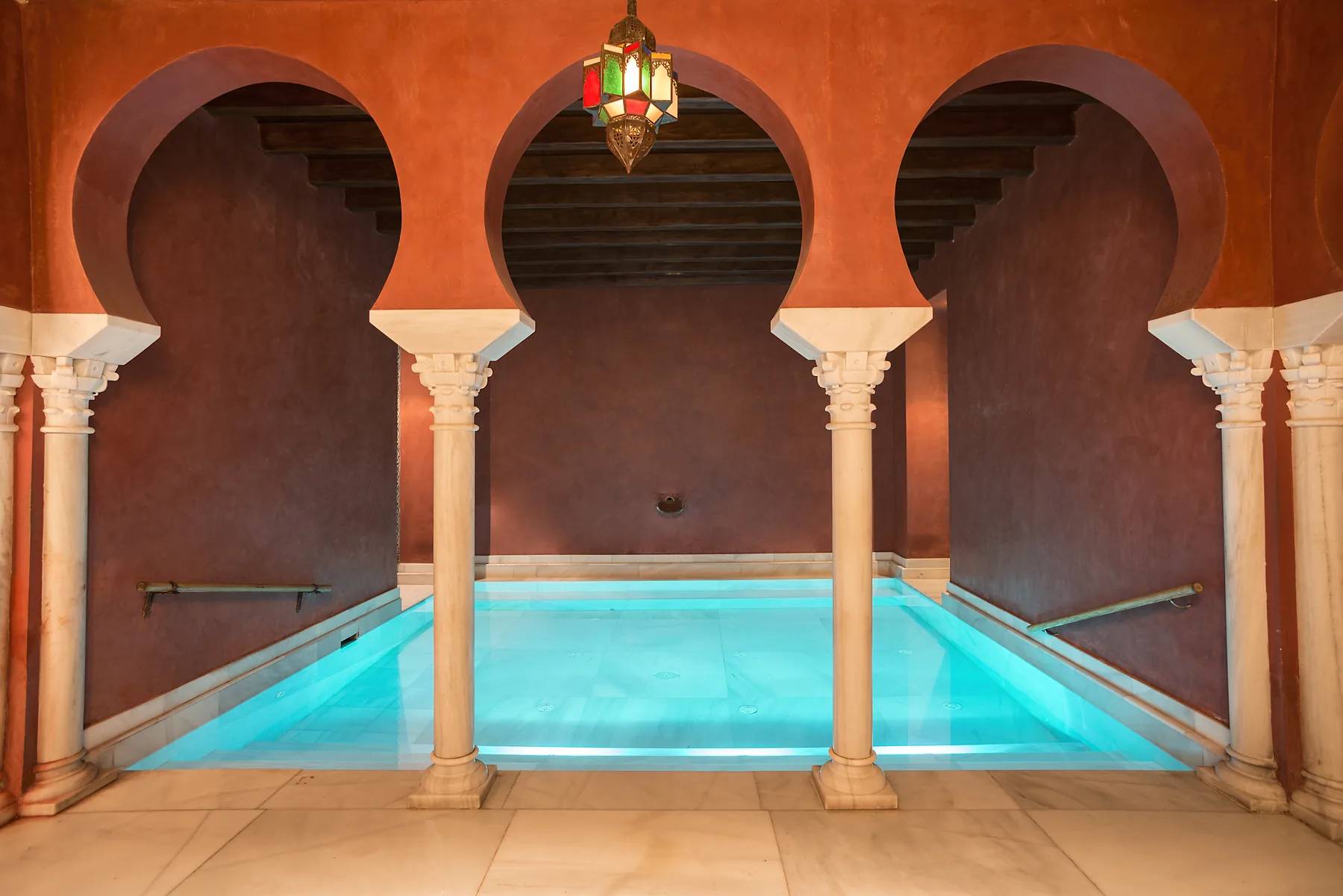
The structure was always the same: a changing room, a cold room, a warm room and a hot room. The water was heated by a system of underground furnaces that also heated the floor — a principle inherited directly from the Roman baths. Star-shaped openings in the ceiling let in points of natural light that created an atmosphere somewhere between the functional and the sacred.
The most modest baths were simple and functional. Those serving the elites had marble, glazed ceramics, ornamental fountains and rest rooms with divans. But all of them — from the humblest to the most luxurious — shared the same sequence of cold, warm, hot, steam. The same ritual we follow today.
What happened to them
The Christian Reconquista was merciless with the baths. The new rulers associated the hammam with Muslim identity. Bathing frequently was suspicious. In 1567, Philip II expressly banned the use of Arab baths, the clean changes of clothes on Fridays and any custom associated with Moorish culture. Of the 700 baths of caliphal Córdoba, the vast majority disappeared — demolished, converted into warehouses or simply abandoned.
Some survived as archaeological remains. Others were buried beneath later constructions. And a few — very few — reached the present with their walls, their arches and their vocation for water intact.
The ones that survive
The caliphal baths of the Alcázar of Córdoba are a site that can be visited as a museum. Those of Santa María, those of San Pedro, those of the Patio de la Aduana — all are archaeological remains bearing witness to that network of 700 hammams. They can be seen, photographed, studied. But not used.
The Arab Baths of Córdoba on Calle Almanzor are something else. Here, the water keeps flowing. The steam still fills the rooms. The stone is still warm. It is not a museum of what once was: it is a continuation of what always was. Beneath this floor lie remains of 1st-century baths. In the 15th century, the baths of the Henestrosa family operated here. And today, in the 21st century, when you cross our door and dip your feet into the hot pool, you are taking part in a tradition this land has been practising for two thousand years.