
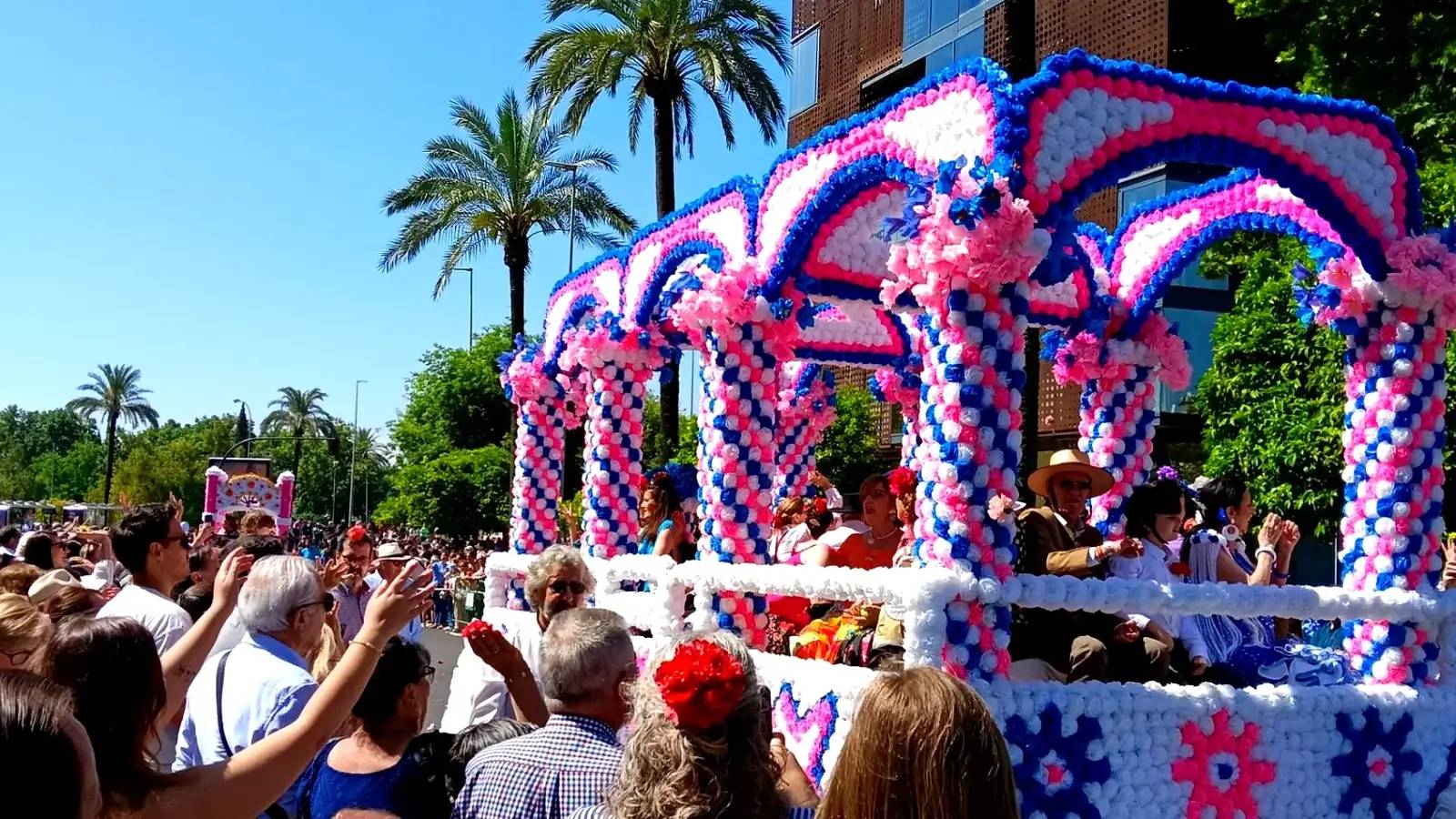
There are battles that should not exist, and there is one, in Córdoba, that can only exist here: a battle without noise, without winners or losers, where the weapons are carnations and the result is a city smiling. When, on the last Sunday before the May holiday, the Paseo de la Victoria fills with flower-covered floats, Córdoba knows that the most awaited month of the year has just begun.
What the Battle of the Flowers is
The Battle of the Flowers is the festive parade with which Córdoba symbolically opens its great month. It was born in 1915 and has been organised ever since by the Federation of Córdoba Peñas, which has kept the tradition alive for more than a century. Some twenty floats decorated with thousands of flowers travel along the Paseo de la Victoria and the Avenida de la República Argentina while more than one hundred thousand carnations are thrown between the floats and the public.
The mechanics are what make it unique: the people on the floats throw carnations to those on the street, and the public picks those flowers up off the ground and throws them back at the floats. A clean, joyful battle that goes back and forth, lasts all morning and in which nobody loses.
When it takes place
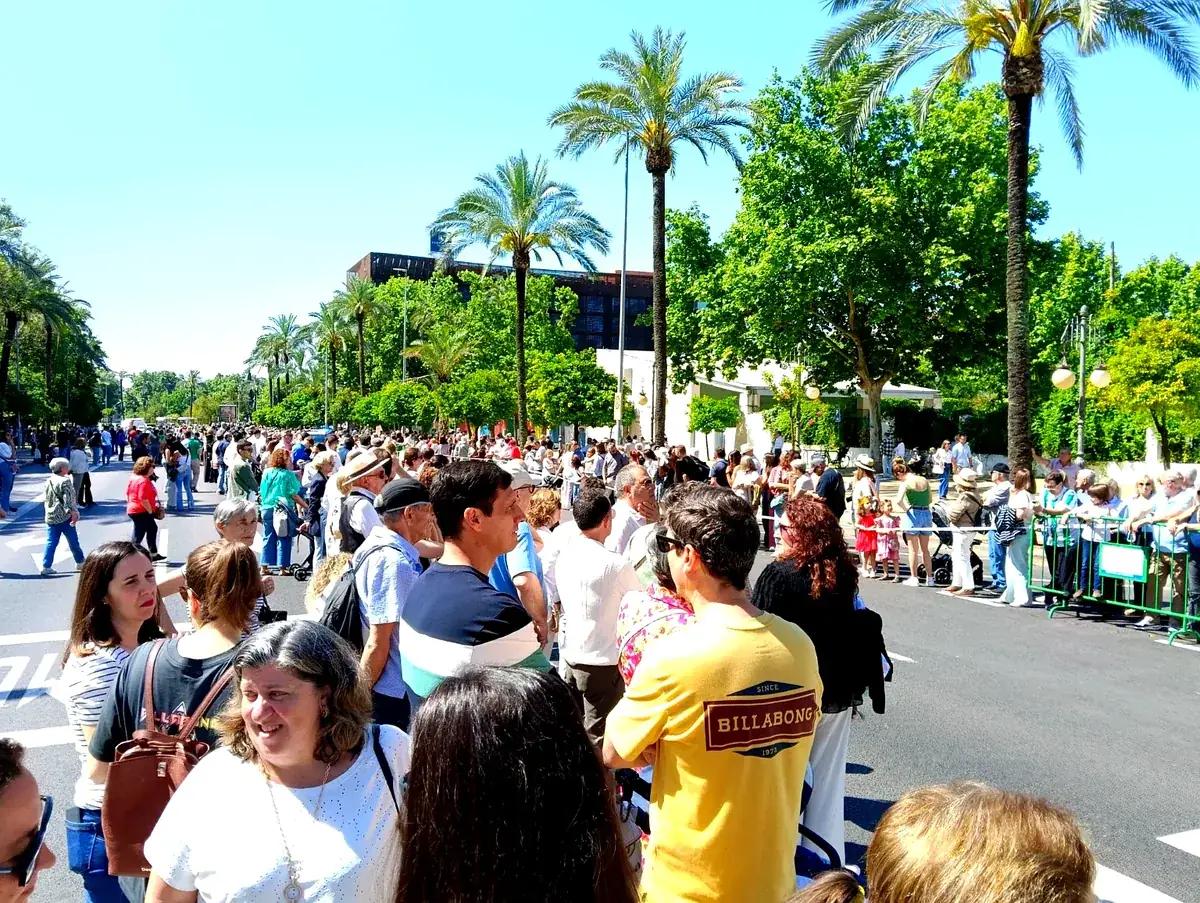
The Battle of the Flowers takes place every year in late April, as the starting signal for May in Córdoba. The most recent edition was held on Sunday 26 April 2026 at 12:00; the next date is announced, as every year, at the start of the year. The route runs along the Avenida de la República Argentina and the Paseo de la Victoria, two of the great avenues of the western part of the centre, next to the Jardines de la Victoria.
It is the prelude to an intense month. Right after it come the May Crosses (in late April and early May) and, almost without pause, the Patios Festival (the first fortnight of May), Intangible World Heritage. May closes with the Fair of Nuestra Señora de la Salud. The Battle of the Flowers is the start button for all of it.
More than a century of tradition
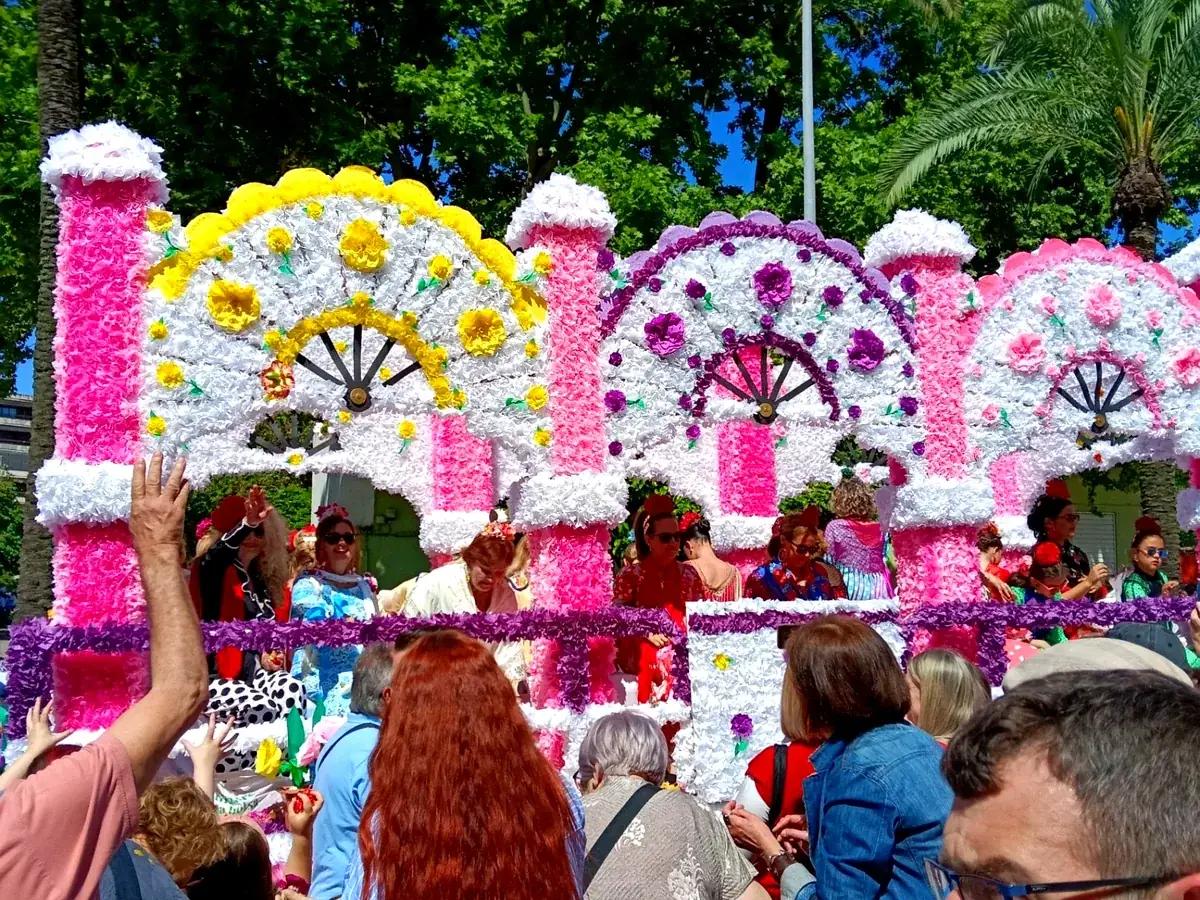
The festival began in 1915 as a popular way of celebrating spring. What in other cities was a one-off event consolidated in Córdoba as an annual gathering that has survived wars, post-war years and modern times. Every year the Federation of Córdoba Peñas calls together the brotherhoods, associations and groups that design and build the floats over weeks. On the day of the parade, that invisible work suddenly becomes visible: enormous structures literally covered in flowers, with arches, domes, fans and architectural motifs paying tribute to the city itself.
Some floats use natural carnations, others use waxed-paper flowers made by hand one by one. When a float passes close by, what you see is the result of hours and hours of many people’s hands gluing petals.
An image that defines Córdoba in May
Córdoba in May is another city. The squares fill with crosses, the patios open their doors, the balconies bloom and the atmosphere changes. The Battle of the Flowers sums up that spirit in a single morning: palm trees, blue sky, flamenco dresses, fans, families, locals and visitors mixed together, children picking carnations off the ground, grandmothers waving from the front row.
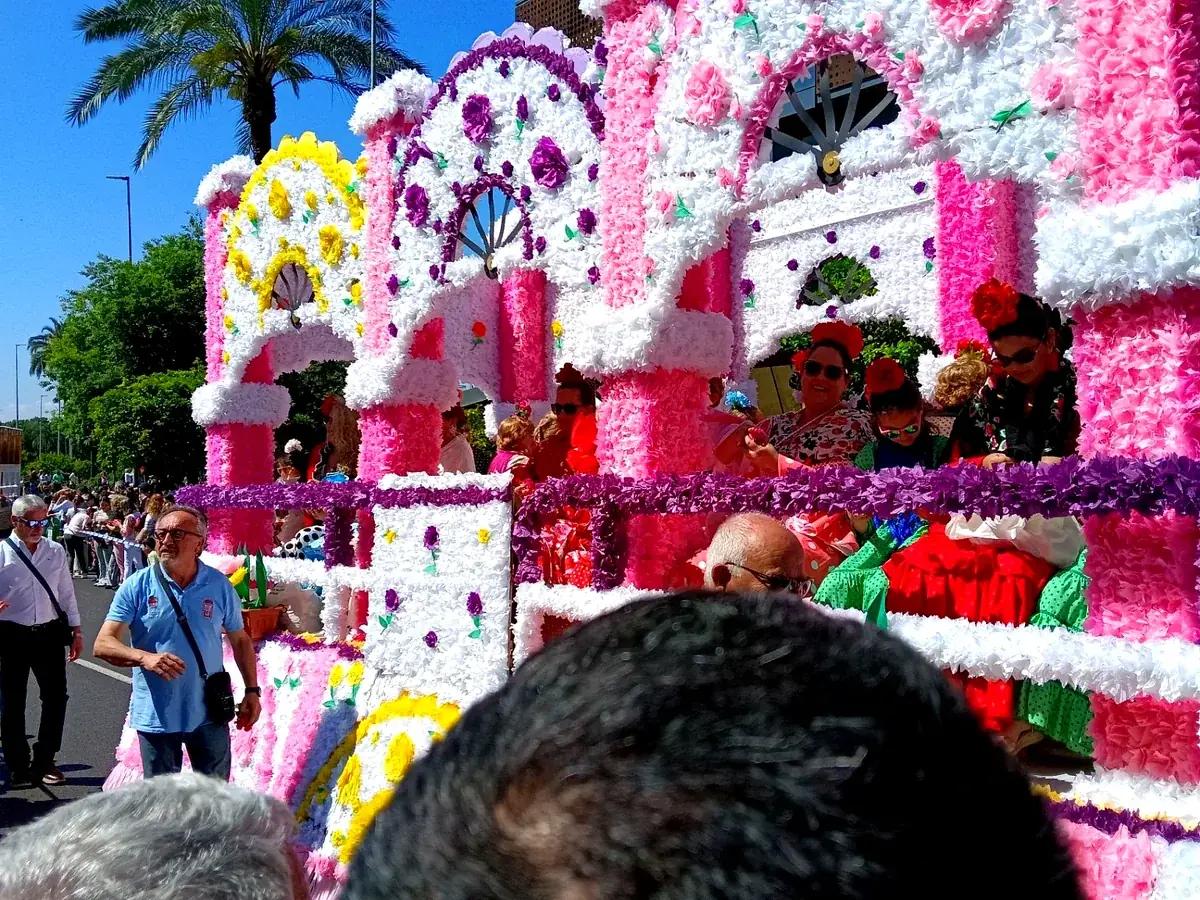
It is not a solemn festival. It is popular, of the street and full of light. Perhaps that is why it is so authentic: nobody comes to represent anything, they come to have fun. And that, in a city declared World Heritage four times over, is something to be grateful for.
Tips to enjoy it well
It pays to arrive early. The area of the Paseo de la Victoria, especially near the gardens, fills up quickly. If you want to watch the floats pass from a good position, the sensible thing is to be there half an hour beforehand. The parade starts around midday and lasts roughly an hour and a half, depending on the pace of the year.
At the end of April the Córdoba sun is already strong. A hat, water and, if possible, comfortable clothes. The centre has traffic closures all morning, so if you are coming from outside, the most practical thing is to arrive by public transport or park in somewhat distant areas and walk.
And a tip only the locals give: look beyond the float. The faces of the crowd say as much as the flowers. The children picking carnations off the ground, the elderly in the front row, the flamenco dresses of those on the floats, the handcrafted details of the decoration. That is the real festival.
After the bustle, the water
There is a very Córdoban way of living May: going out into the street, letting the festival carry you, and then looking for a refuge of calm. After a morning among floats, sun, music and crowds, an Arab bath becomes the perfect counterpoint. Lukewarm water, calm, stone, gentle scents and a pause so the body can recover what the festival has taken.
The Arab Baths of Córdoba are on Calle Almanzor, in the heart of the Jewish Quarter, a three-minute walk from the Mosque-Cathedral and fifteen from the Paseo de la Victoria. If the morning was festival, the afternoon can be pause. May in Córdoba is best lived by alternating the city and the calm.