
The Legend of the Christ of the Lanterns
The legend of the Christ of the Lanterns is one of the most emblematic of Córdoba, set in the historic Plaza de los Capuchinos and created in 1794 by the sculptor Juan Navarro León.\n\nAccording to the legend, every night a hooded man, whose feet do not touch the ground, walks towards the square and kneels at the feet of the Christ, in an apparent search for comfort or redemption.\n\nThis tale was born from a story about a man found half-dying at the feet of the Christ. The legend, together with the illuminated figure of the Christ, has made this square a symbol of faith and culture in Córdoba, and remains a source of inspiration and reflection for locals and visitors alike.
The Ghosts of the Faculty of Law of Córdoba
The legend of the ghosts of the Faculty of Law and Economics in Córdoba has circulated among students, workers and residents of the city. Formerly the Convent of El Carmen, it is the setting for legends about apparitions of monks and soldiers of times past.\n\nAccording to the accounts, these ethereal figures glide through the corridors and whisper in the empty classrooms, creating an atmosphere of mystery. These phenomena, recounted by students and staff, have enriched the oral tradition of the institution, blending the mystical and the academic.\n\nThese accounts have even been studied by the team of the television programme Cuarto Milenio.
The Heads of the Infantes de Lara
The legend of the Heads of the Infantes de Lara recounts a tragic episode of the Middle Ages, in which the Seven Infantes de Lara were murdered in Soria by order of Ruy Velázquez, due to a palace intrigue. Afterwards, their heads were brought and hung from the arches of the Moorish alley of the Casa de las Cabezas in Córdoba, as a way of displaying the consummated revenge.\n\nThis story has endured over time, leaving an indelible mark on the collective memory of Córdoba, and is remembered today in the name of Calle Cabezas and the Casa de las Cabezas, places that evoke this sombre but significant episode of history.
The Legend of the Girl of the Orive Palace
The legend of the Girl of the Orive Palace, in Córdoba, takes us back to the 17th century, during the festivity of La Fuensanta. It is said that the magistrate Carlos de Ucel and his daughter Blanca encountered gypsies at the Orive Palace. After an unfortunate encounter, the girl disappeared and was never found.\n\nSince then, it is said that on the nights of the festivity, weeping and spectral apparitions are heard, evoking the tragic loss of the magistrate's daughter. This legend has become entwined with the history of the Orive Palace, and the tales of weeping and apparitions remain part of the mystery surrounding this historic Córdoban site.
The Tunnel of the Mosque of Abd al-Rahman
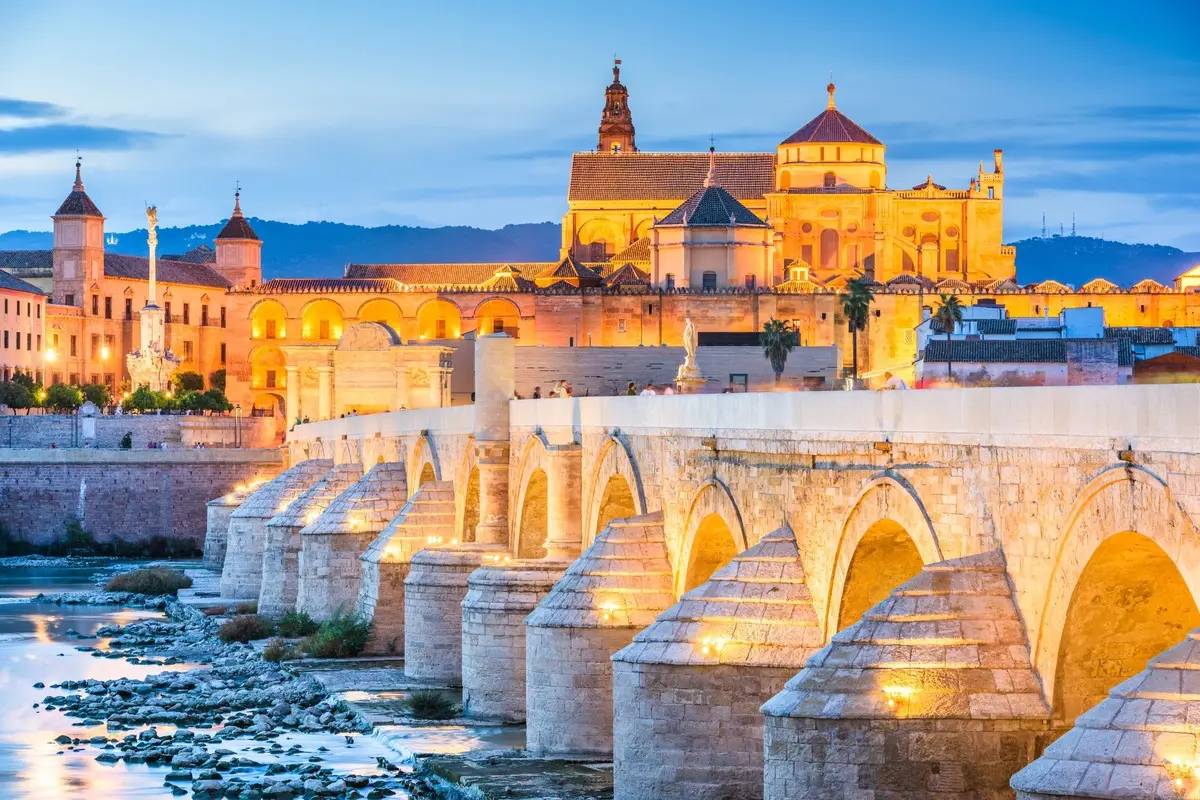
The legend of the tunnel of the Mosque of Córdoba is a popular tale passed down over the years in this historic city. The legend holds that there is an underground tunnel connecting the palatine city of Medina Azahara with the Mosque of Córdoba, allowing the caliph to reach the Mosque directly on horseback to lead the daily prayers of the faithful.\n\nAnother tunnel is also mentioned, known as the 'Sabat', which connected the Alcázar, former residence of the caliphs and emirs of Córdoba, with the Mosque. This tunnel was used by the Caliph to avoid being seen by the people as he passed from the Alcázar to the Mosque to pray.\n\nThe legend has endured over time and remains a popular tale among the inhabitants and visitors of Córdoba, adding a touch of mystery and fascination to the rich history and monumental architecture of the city.
The Column of Hell in the Mosque
The Legend of the Column of Hell in the Mosque-Cathedral of Córdoba tells that one of the columns of the building was carved in the very bowels of hell, and magically transported to the Mosque. It is said that when scratched, the column gave off a smell of sulphur, thus evoking its infernal origin.\n\nAlthough the column is now protected, the legend persists as an intriguing blend of the sacred and the profane, adding a layer of mystery to the rich history of the Mosque-Cathedral. This tale intertwines the architectural with the supernatural, and remains a fascinating element of Córdoban oral tradition.
Almanzor and the Bells of Santiago
Almanzor, the warlord who gives his name to the street where our Arab baths stand, is the protagonist of one of the best-known legends of medieval Spain. After sacking Santiago de Compostela in the year 997, he ordered the Christian prisoners to carry the cathedral bells on their shoulders all the way to Córdoba, covering hundreds of kilometres.\n\nOnce in the capital of the Caliphate, the bells were installed upside down as oil lamps in the Mosque. There they remained for more than two centuries, until Ferdinand III reconquered Córdoba in 1236 and ordered the Muslim prisoners to return them to Santiago, also on their shoulders. The story closed with the same gesture with which it began.\n\nCalle Almanzor, where today you can stroll on your way to our Arab baths, preserves the name of that man whose power transformed the city. The stones you tread have borne his name for a thousand years.